

Digital Food Safety: From Reactive Control to Predictive Management
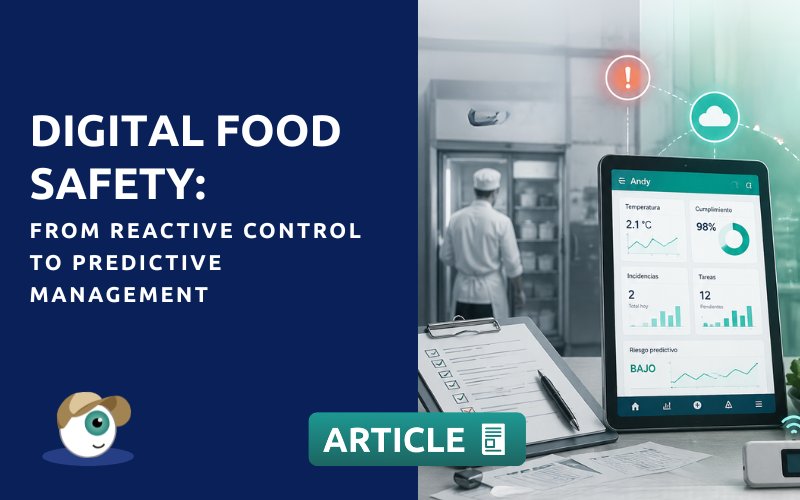
Digital food safety is transforming the way restaurants, hotels, supermarkets and contract catering businesses manage their daily operations.
For years, food safety has relied primarily on reactive controls: recording temperatures, conducting audits, documenting incidents and reviewing procedures to demonstrate compliance with established standards.
While this approach remains essential, it has an important limitation. In many cases, problems have already occurred by the time they are identified.
A refrigeration unit that fails overnight, a critical task that is missed, or a recurring deviation across multiple locations can become a significant risk before anyone notices.
That is why more organisations are embracing digital food safety as a way to move towards a more preventive model based on data and real-time visibility.

The limitations of reactive food safety management
Most organizations still rely on periodic controls.
Teams record information, complete forms and carry out scheduled checks to ensure procedures are being followed.
Although these controls are necessary, there is a clear challenge: multiple issues can arise between one review and the next.
Equipment may show signs of failure for days before breaking down completely. A procedure may be repeatedly ignored without anyone identifying the trend. Poor practices can spread across several locations before they are uncovered during an audit.
When information remains scattered across documents, spreadsheets and paper records, organisations often discover problems too late.
For this reason, digital food safety is becoming a priority for businesses looking to reduce risk and improve operational responsiveness.
Digital food safety turns data into prevention
Traditionally, records have been used to prove that controls were completed correctly.
However, digital food safety allows those same records to deliver far greater value.
Every temperature reading, completed audit, reported incident and operational task generates information about how an organization is really performing.
When all this information is centralised, businesses can identify:
- Equipment with recurring deviations.
- Processes that generate the highest number of incidents.
- Locations with lower compliance levels.
- Areas requiring additional training.
- Tasks that are frequently completed late.
In this context, data stops being a historical record and becomes a tool for prevention and continuous improvement.
Digital food safety helps identify risks before they become problems
Serious incidents rarely appear without warning.
Most of the time there are early indicators that go unnoticed.
Small temperature deviations. Audit scores that gradually decline. Repeated delays in critical tasks. Equipment that requires frequent intervention.
Viewed individually, these signals may seem insignificant.
However, when data is analysed collectively, patterns begin to emerge that help organisations identify risks before they affect food safety or operational performance.
This is one of the greatest advantages of digital food safety: the ability to transform operational data into meaningful insights.
Instead of reacting after a problem occurs, managers can take preventive action before risks escalate.
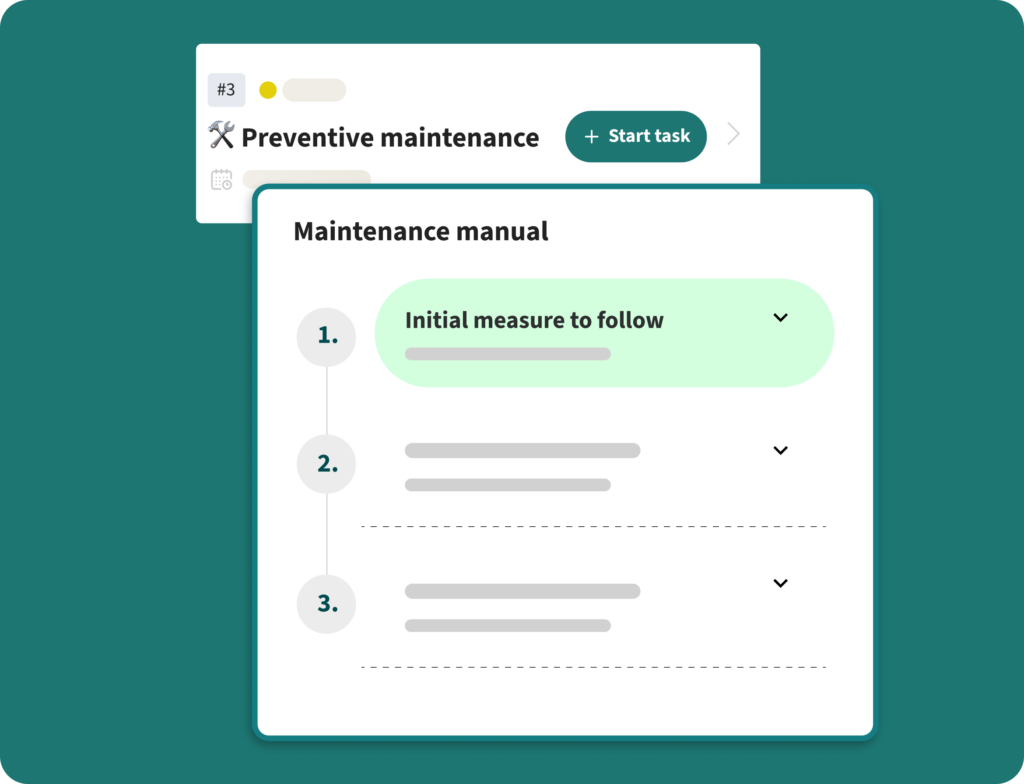
From periodic inspections to continuous visibility
Another major benefit of digital food safety is the shift from occasional supervision to continuous visibility.
Traditionally, many organizations only gained a snapshot of their operations during an audit, inspection or scheduled review.
Today, digital platforms provide a much more complete and up-to-date picture.
Quality and operations teams can see what is happening across locations in real time, identify deviations quickly and prioritise actions before problems grow.
This continuous visibility not only strengthens food safety performance but also helps improve operational consistency, reduce costs and support better decision-making.
How Andy supports digital food safety
Digital food safety requires more than simply replacing paper forms with electronic records.
The real value comes from connecting operational information and making it accessible when decisions need to be made.
Andy enables organisations to centralize audits, records, incidents, operational tasks, food labeling and traceability processes within a single platform.
This provides a clearer view of operations and helps teams identify patterns that may otherwise remain hidden within disconnected systems.
With centralized information, businesses can detect potential risks earlier and take action before they impact operations.
Faster response through greater visibility
One of the biggest advantages of digital food safety is the ability to identify issues sooner and respond more effectively.
When critical tasks are missed, audits reveal non-conformities or operational parameters fall outside acceptable limits, having all information available in one place allows teams to assess the situation quickly and take appropriate action.
This improves operational control, reduces risk and supports more informed decision-making.
Instead of discovering issues weeks later during a document review, organisations can address them while they are still small and manageable.
The future of food safety is digital
Food safety will always require robust procedures, audits and well-defined controls.
However, the future belongs to organisations that can use available information to anticipate risks and continuously improve their operations.
Digital food safety makes it possible to move from a reactive model to one focused on prevention, visibility and data-driven decision-making.
With tools like Andy, businesses can transform operational data into meaningful action, reduce risk and build safer, more efficient operations that are ready for future challenges.
Want to discover how digital food safety can improve your operations?
Request a demo of Andy and learn how restaurants, hotels, contract catering providers and food retailers are using technology to anticipate risks and strengthen their food safety standards.
